What Is Montessori?
Montessori is a child-centered approach to education designed to help each child grow into their fullest potential — academically, socially, and emotionally. Rather than asking children to fit into a system, Montessori classrooms are carefully prepared to meet children where they are and support how they naturally learn best.
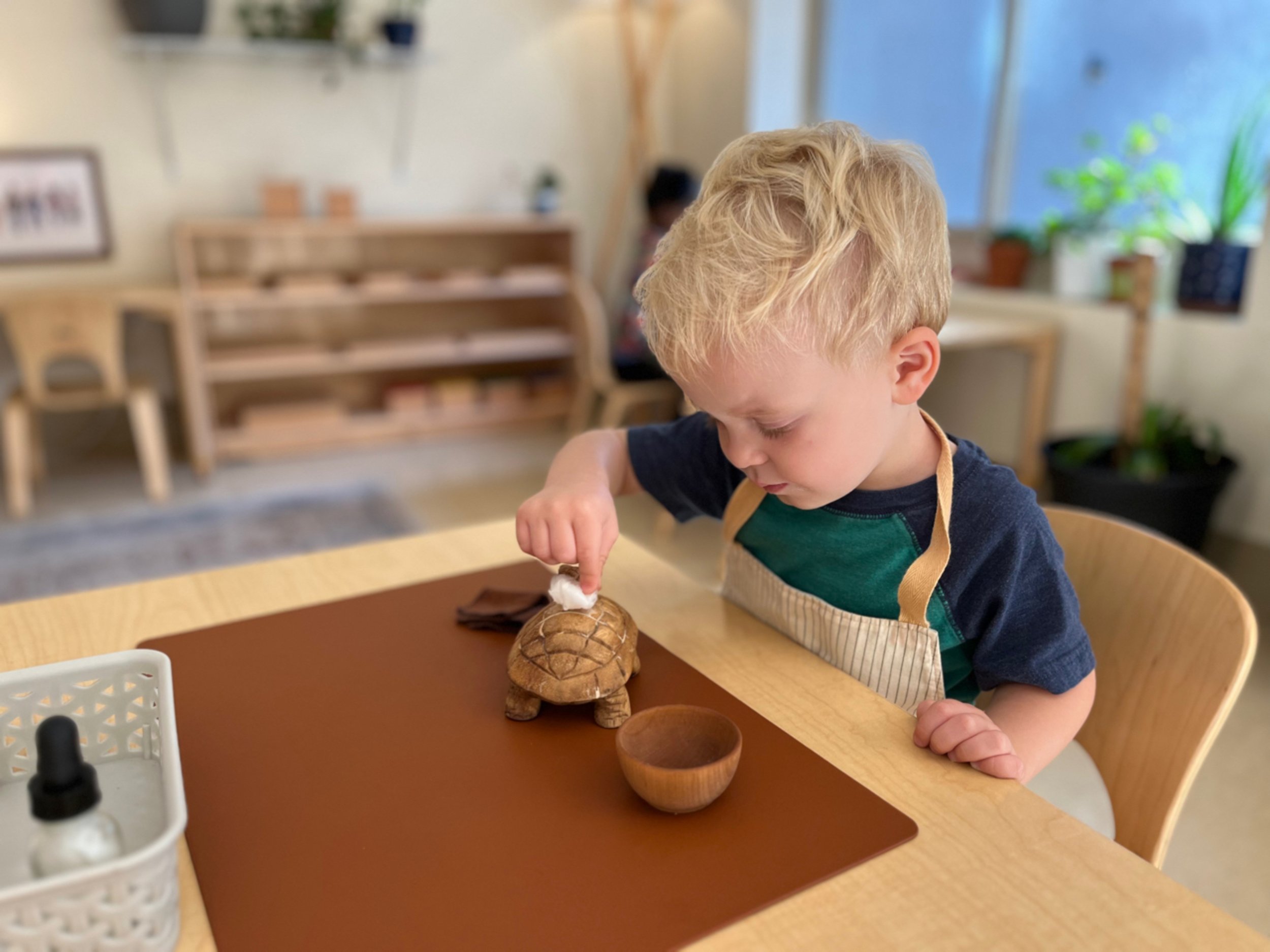
In a Montessori environment, children are active participants in their own learning. They choose meaningful work, move freely within the classroom, and engage deeply with hands-on materials that build understanding through experience, not memorization. Teachers, called guides, observe closely and introduce lessons at just the right moment, allowing learning to unfold in a way that is both structured and responsive to each child.
Traditional schooling models were designed for a different time, often grouping children strictly by age and moving entire classes through the same material at the same pace. Montessori recognizes that children develop on individual timelines. In mixed-age classrooms, younger children learn by observing older peers, and older children build confidence and mastery by mentoring others. This creates a strong sense of community and shared responsibility.
At its heart, Montessori is more than a set of materials or classroom practices — it is a way of being with children. It is grounded in respect, trust, and the belief that children are capable, curious, and driven to learn when given the right conditions. Guides partner with children, offering support and challenge while honoring independence and personal growth.
The goal of Montessori education is not simply academic success, but the development of thoughtful, resilient, and engaged human beings — children who know how to think, collaborate, problem-solve, and care for themselves, others, and their world. In this way, Montessori is truly education for life.